
Glass, Glass Replacement & Installation
How to Identify the Right Glass Thickness for Your Window
Jul
Choosing the Right Glass Thickness for Your Window
Knowing how to identify the right glass thickness for your window is essential when replacing or installing new panes. Glass thickness impacts strength, safety, insulation, and even compliance with building regulations. Choosing the wrong thickness can lead to cracks, poor energy performance, and costly mistakes. In this guide, you’ll learn how to choose the correct glass thickness based on your window’s size, location, and purpose.
Why Glass Thickness Is Important
Understanding how to identify the right glass thickness for your window starts with knowing why thickness matters. The right glass thickness directly influences several key performance areas, including:
- Durability and strength
- Thermal and acoustic insulation
- Compliance with safety standards
- Proper fit within the window frame system
Common Glass Thicknesses for Residential Windows
When figuring out how to identify the right glass thickness for your window, it helps to see how different thicknesses are commonly used in residential settings. Below is a breakdown of typical glass sizes and their ideal applications:
| Glass Thickness | Typical Use |
| 3mm | Small window panes |
| 4mm | Standard residential windows (single-glazed) |
| 5mm–6mm | Sliding doors (Tempered), larger windows |
| 6.38mm | Laminated safety glass (two 3mm panes + interlayer) |
| 8mm–10mm | Frameless windows, balustrades, or large panels |
| 20–28mm | Double-glazed units (combined thickness) |
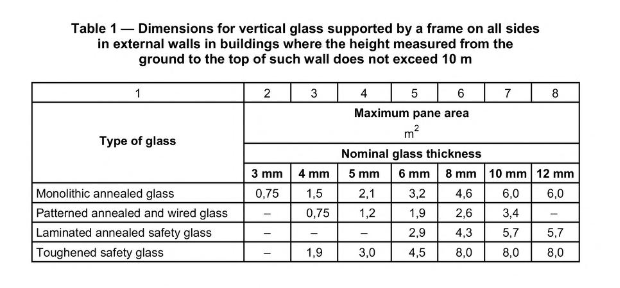
Below is the table from the SANS 10400 – Part N (For South African Application)
 Step-by-Step: How to Identify the Right Glass Thickness
Step 1: Consider the Size of the Window Pane
A critical part of how to identify the right glass thickness for your window is matching the glass thickness to the window’s size. Larger panes naturally need more support, so use the following size-to-thickness guide:
- Smaller windows (under 0.75m²): 3mm is sufficient
- Smaller windows (under 1.5m²): 4mm
- Medium-to-large window panes (1.5–3m²): Use 5mm–6mm
- Oversized or full-height windows: 8mm+ for strength and rigidity
📌 Larger areas require thicker glass to avoid flexing, which can cause cracking over time.
Step 2: Determine the Type of Glass Needed
Another key element in how to identify the right glass thickness for your window is choosing the correct type of glass. Your decision will depend on whether the priority is strength, safety, insulation, or soundproofing. Here’s how different types influence thickness:
- Toughened (tempered) glass is stronger, allowing for thinner sizes
- Laminated safety glass combines two panes for impact resistance (ie, 6.38mm)
- Double-glazed units (IGUs) combine two panes, usually 4mm + 4mm or 6mm + 6mm for better energy efficiency or soundproofing
- Soundproofing or thermal insulation may require thicker or asymmetric combinations like 6mm + 4mm
Step 3: Match the Thickness to the Frame System
- Check the glazing rebate depth of your window frame (ie. Steel, wood, aluminium or upvc frames)
- Most residential aluminium frames accommodate up to 6mm
- For uPVC and commercial frames, IGUs of 20–28mm are typical
✅ If upgrading to thicker glass, confirm the frame supports the new size.
Step 4: Understand Safety and Legal Requirements
In South Africa and many other countries:
- Glass used in doors, sidelights, and low windows (less than 500mm from the floor) must be safety glass
- Glass used next to staircases must be safety glass
- Tempered glass is often 4mm–6mm, depending on size and risk area
Always confirm compliance with SANS 10400-N or local building codes.
Tools for Measuring Glass Thickness (Optional)
- Digital glass thickness meter – best for measuring in-situ (non-invasively)
- Vernier caliper – for loose glass panes
- Supplier specs – if replacing existing glass, ask your installer or glazier for the previous specs
Glass Thickness Recommendations by Application
| Application | Recommended Thickness |
| Bathroom windows | 4mm frosted or 6.38mm laminated |
| Sliding door panels | 6mm–8mm toughened or 6.38mm laminated |
| Shopfront or commercial windows | 6mm–10mm toughened or 6.38mm laminated |
| Balcony or frameless panels | 10mm–12mm |
| Double-glazed residential windows | 20mm–28mm IGU (4+12+4 or 6+12+6) |
Final Thoughts
Choosing the right window pane starts with understanding how to identify the right glass thickness for your window. The ideal thickness will vary depending on size, safety needs, and performance expectations. Keep these considerations in mind:
-
Don’t rely on 4mm for high-risk areas or large windows
-
Always check whether your frame supports thicker glass
-
When uncertain, consult a glazing expert or installer
Making the right choice ensures not just proper fit—but also long-term comfort, energy savings, and peace of mind.
