
SANS, Glass, Glass Replacement & Installation
SANS 10400 Part N: A Complete Guide to Glazing

Dec
SANS 10400 Part N: A Complete Guide to Glazing Regulations in South Africa
Whether you’re installing new windows, glass doors, or planning a commercial shopfront, SANS 10400-N is the key South African regulation that governs how glass must be used safely and legally in buildings. This regulation ensures that glass installations are strong, secure, and safe for occupants and the public.
Let’s break it down in simple terms.
What Is SANS 10400 Part N?
SANS 10400 Part N is a section of the National Building Regulations (NBR) that focuses specifically on glazing—the installation of glass in buildings.
It sets minimum legal standards for:
- Where safety glass is required
- How to choose the right type and thickness of glass
- How glass must be installed for safety and structural strength
The goal is to prevent injury, reduce breakage, and ensure glass performs under stress (wind, human impact, thermal expansion, etc.).
When Is Safety Glass Required?
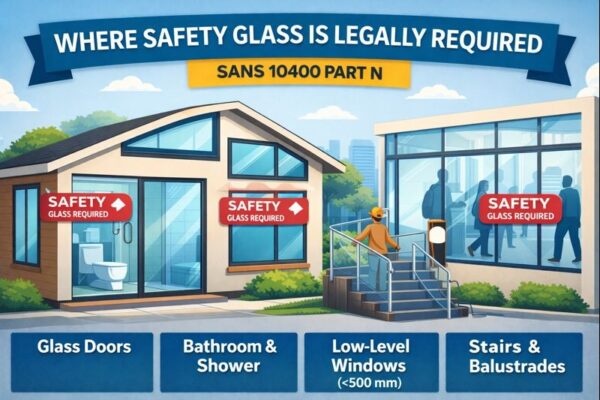
Safety glass (such as toughened or laminated glass) is required in areas where there is a risk of injury or breakage. These are often called hazardous locations.
Here’s where SANS 10400-N requires safety glazing:
1. Glass doors
- All glass in sliding, folding, hinged, or pivot doors must be safety glass.
2. Sidelights and glass near doors
- Any glazing within 300 mm of a door and less than 2.1 m from the floor must be safety glass.
3. Low-level windows
- Any glass window less than 500 mm from the floor (except small panes) must be safety glass.
4. Bathrooms
- All glazing around showers, baths, and toilets (especially in confined spaces) must be safety glass.
5. Public access areas
- All glass in schools, malls, hotels, and buildings with high pedestrian traffic must comply with tougher safety requirements.
How Is Glass Thickness Determined?
SANS 10400-N requires that glass must be strong enough to handle expected loads — especially wind loads and impact.
Glass thickness is chosen based on:
- Size of pane
- Type of frame (wood, aluminium, steel)
- Glass support conditions (supported on 2, 3, or 4 sides)
- Height above ground (affects wind load)
A chart in the standard helps glaziers determine minimum thickness required, based on size and wind zone.
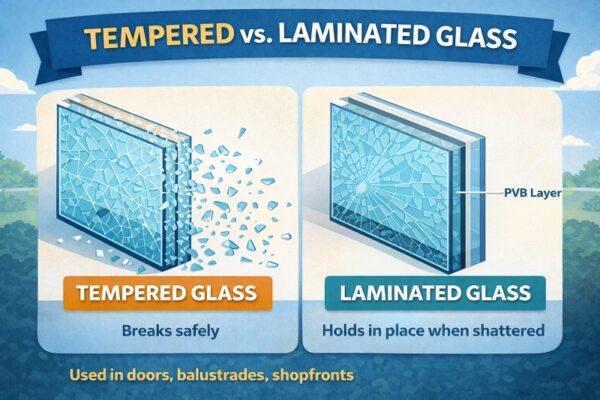
Tempered (toughened) glass is stronger than normal glass, while laminated glass stays in one piece when shattered.
Installation Standards
Proper installation is just as important as choosing the right glass:
- Glass must be installed without stress on the edges.
- Gaps must allow for thermal expansion.
- Sealants and gaskets must be weatherproof and UV resistant.
- Glass must be fully supported in its frame and not rattle or move.
Bad installation = unsafe glazing, even if the right glass is used.
Marking and Certification
All safety glass used in South Africa must be:
- Marked permanently (usually sandblasted or etched)
- Carry a SANS certification or international equivalent
- Identifiable after installation — proving it’s compliant
If the marking is missing, the installation may be rejected by building inspectors or insurance providers.
Who Is Responsible for Compliance?
The following professionals are typically involved:
- Architects – design and specify glazing systems
- Glaziers / Installers – install glass according to SANS 10400-N
- Engineers – for large or structural glazing projects
- Building Control Officers (BCOs) – inspect and enforce compliance during municipal approvals
Builders and contractors are legally obligated to follow these regulations.
Glazing in Plan Submissions
If your building plan includes windows, doors, or curtain walls:
- You must show compliance with Part N
- A Competent Person may be required to sign off
- Local authorities will inspect glazing compliance before approval or occupation
Summary: Key Takeaways
|
Requirement |
What It Means |
| Safety Glass in Hazard Zones | Required in doors, bathrooms, low windows, public areas |
| Minimum Thickness Rules | Based on pane size, frame type, wind load |
| Correct Installation | Must allow for expansion, avoid stress, and be fully supported |
| Certified & Marked Glass Only | Must be visibly marked as safety glass (toughened or laminated) |
| Legal Liability | Installers, architects, and builders are responsible for compliance |
Why It Matters
Failing to comply with SANS 10400-N can result in:
- Injury and legal claims
- Failed building inspections
- Rejected insurance claims
- Delays in occupation certificates
Following the standard ensures safety, durability, and legal compliance for all glass installations.
Need Help With Glazing Compliance?
Get Glass offers SANS-compliant glazing services for residential and commercial buildings in Gauteng. Whether you need safety glass installation, plan approval assistance, or a fenestration compliance report, our team is ready to help.
