
Glass
How to Measure Window Glass Accurately for Replacement
Jun
How to Measure Window Glass for Replacement
How to measure window glass accurately for replacement depends on the frame type, glass style, and installation method. Whether you’re replacing a cracked single pane or a fogged-up laminated glass, taking precise measurements ensures a perfect fit and saves you time, money, and frustration. Taking a few simple measurements can help you get a faster window glass replacement quote. 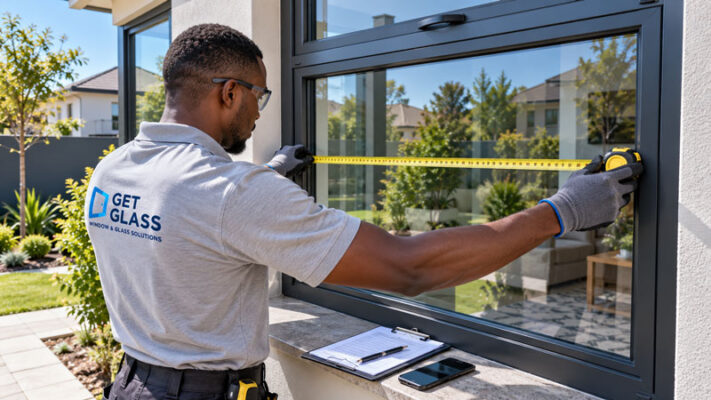
You will normally need:
- Glass width
- Glass height
- Approximate glass thickness
- Glass type
- Photos of the window
- Your location
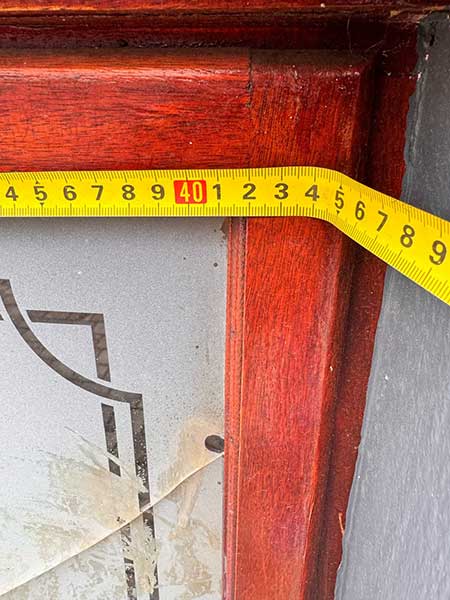
Important: The visible glass is not always the actual replacement glass size. Part of the pane normally sits behind the frame, glazing beads or putty.
Before Measuring Broken Window Glass
Check that the window is safe to approach. If the glass is badly shattered, loose, overhead or likely to fall from the frame, do not try to remove it simply to obtain measurements.
You can usually provide Get Glass with a photograph of the window and approximate dimensions for an initial quote.
Why Accurate Window Glass Measurement Matters
- Ensures a proper fit with no gaps
- Prevents stress cracks caused by tight fits
- Saves money by avoiding waste or re-orders
- Helps glaziers or suppliers cut and deliver exact sizes
- Reduces installation issues and improves energy efficiency
Tools You’ll Need
You only need a few basic tools: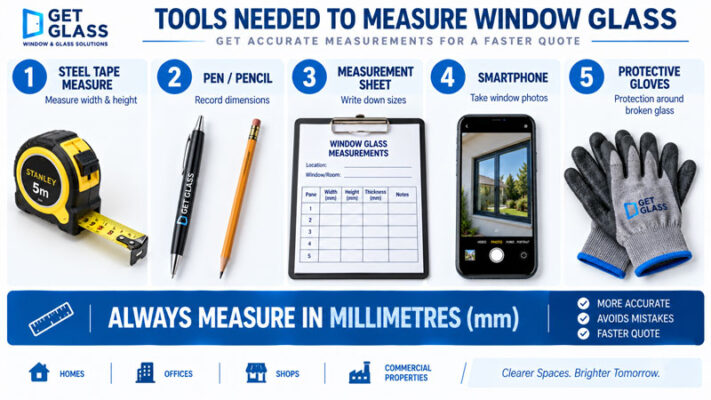
- Measuring tape
- Pen or pencil
- Paper or measurement sheet
- Smartphone for photos
- Protective gloves around broken glass
Always measure in millimetres (mm).
Step-by-Step: How to Measure Window Glass Accurately for Replacement
1. Identify the Frame Type
Measure the individual pane that needs replacing, not the complete window.
For a multi-pane window, clearly identify which pane is broken.
| Frame Type | Measurement Reference |
| Wooden/putty-glazed | Inside the rebate |
| Aluminium/UPVC | Visible glass + depth |
| Glazing bead system | Inside bead-to-bead size |
Determine whether you’re measuring just the glass or the entire system (especially for IGUs or clip-in panels).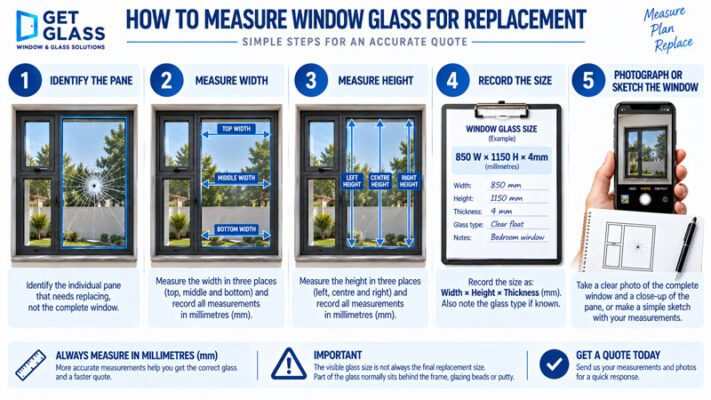
2. Measure the Width and Height 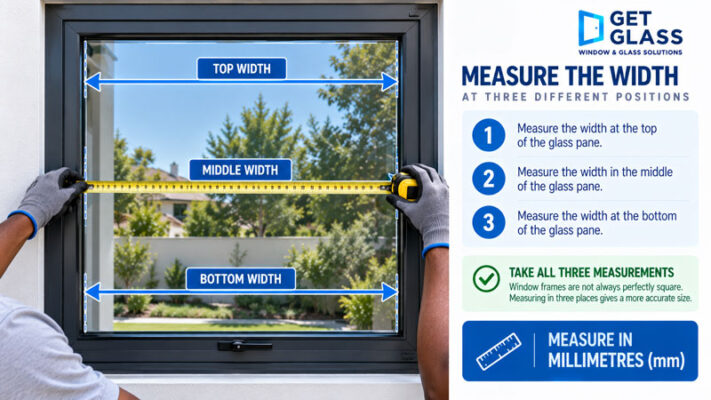
- Measure inside the frame, bead-to-bead, or putty edge to edge
- Take three measurements for both width and height
- Width: top, middle, bottom
- Height: left, centre, right
- Use the smallest value
- Deduct 2–3 mm from width and height to allow for expansion, especially for metal frames.
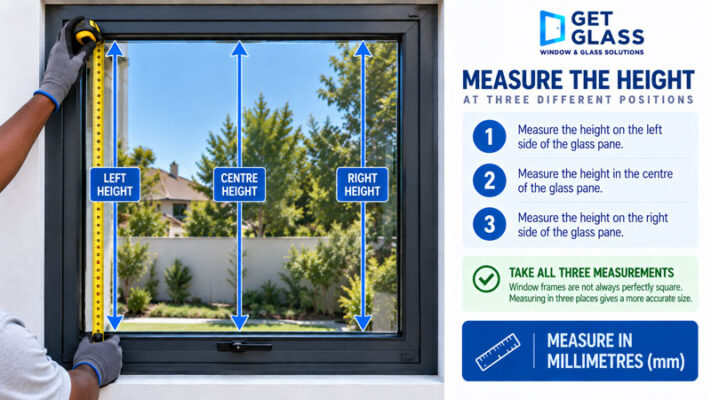
📌 Tip: Always use a metric measuring tape in millimetres.
3. Measure the Glass Thickness (Optional)
- For single-pane glass, standard thickness is 3mm to 6mm
- For double-glazed units, use:
- Spacer bar reading (typically 6mm, 12mm, 16mm)
- Digital caliper or IGU thickness gauge (glaziers have these)
If you can safely see an exposed glass edge, check the approximate thickness.
Common examples include:
- 3mm
- 4mm
- 5mm
- 6mm
- 6.38mm laminated glass
📌 Tip: If unsure, take the old glass to a supplier for matching.
4. Record the Glass Type (if known)
- Clear, frosted, tinted, low-E, or laminated
- If in a door, bathroom, or low window: may require safety glass
- Look for any factory markings or etchings on the edge
5. Photograph or Sketch the Window
- Snap a photo of the opening and frame for reference
- Sketch basic diagrams with labelled dimensions
- If ordering multiple panes, include location codes (e.g., BED1-W1)
This helps avoid mix-ups during delivery or installation.
Visible Glass Size vs Replacement Glass Size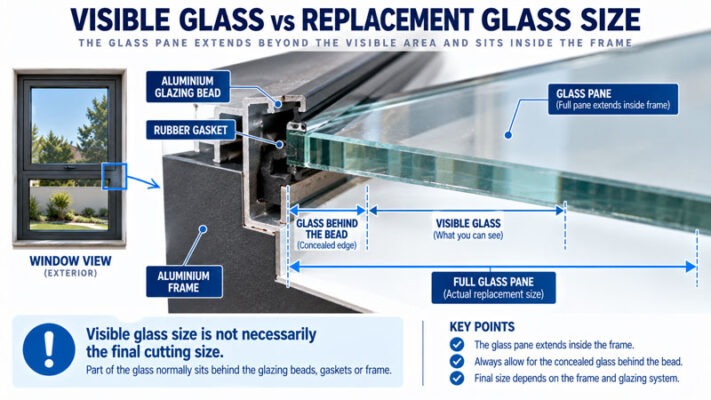
This is one of the most important points when measuring window glass for replacement.
There are three different measurements:
- Visible glass — the glass you can see
- Frame/rebate opening — where the glass is installed
- Replacement glass size — the actual pane required
Part of the glass is normally concealed behind:
- Aluminium glazing beads
- Rubber gaskets
- Timber beads
- Steel frame sections
- Glazing putty
Important
Do not assume the visible glass measurement is the final cutting size.
The required allowance depends on the type of window and glazing system.
How to Measure Broken Window Glass 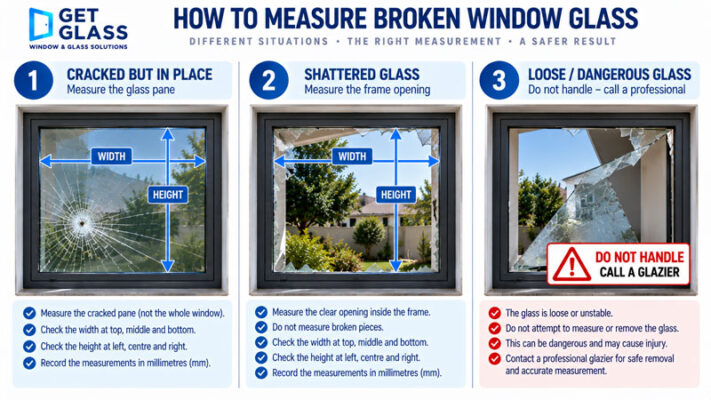
If the Glass Is Cracked but Still in Place
- Leave the glass in the frame.
- Measure the width.
- Measure the height.
- Take photos.
- Do not remove the pane unnecessarily.
If the Glass Is Completely Shattered
- Do not try to reconstruct the old pane.
- Measure the opening.
- Take a photo of the complete frame.
- Take a close-up of the glazing area.
- Avoid handling loose glass.
If the Glass Is Loose or Dangerous
Do not measure it yourself.
Call a professional glazier.
How to Measure Aluminium Window Glass 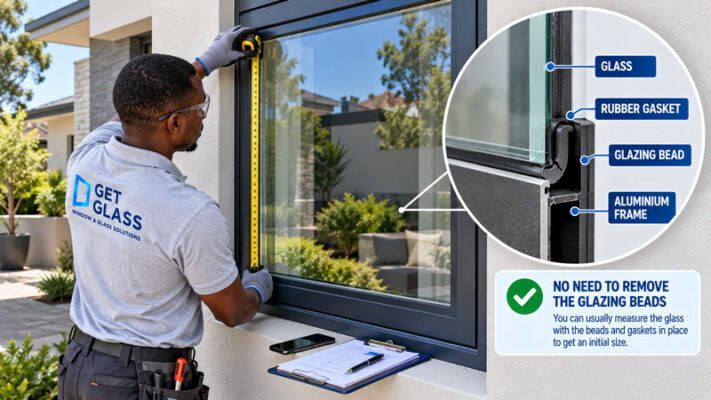
For aluminium window glass replacement:
- Identify the broken pane.
- Measure the width in three places.
- Measure the height in three places.
- Take a photo of the complete aluminium window.
- Take a close-up of the glazing beads and damaged glass.
- Record the glass thickness if known.
Aluminium windows normally hold the glass with glazing beads and rubber gaskets.
You generally do not need to remove the glazing beads simply to request a quote.
How to Measure Steel Window Glass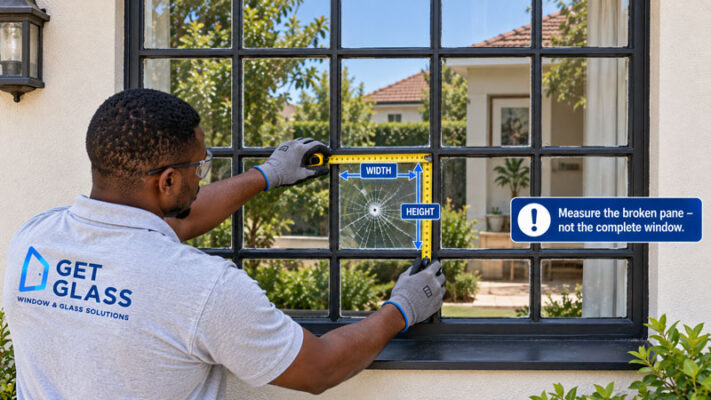
Traditional South African steel cottage-pane windows often contain many small individual panes.
When measuring:
- Measure only the broken pane.
- Measure width and height.
- Take several measurements.
- Check whether glazing putty is used.
- Photograph the complete steel window.
- Photograph the damaged pane.
Older steel frames may not be perfectly square.
How to Measure Wooden Window Glass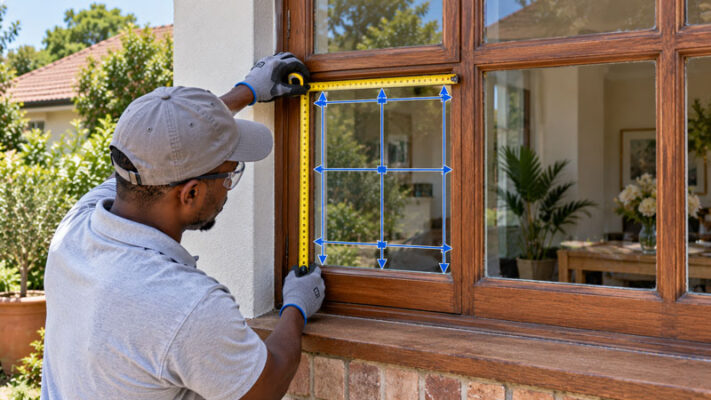
Wooden windows may use:
- Timber glazing beads
- Glazing putty
- Timber rebates
For wooden window glass replacement:
- Measure the broken pane.
- Record width and height.
- Take measurements in several places.
- Photograph the complete window.
- Photograph the timber around the glass.
Older timber frames may have moved or warped over time.
How to Measure Door Glass for Replacement 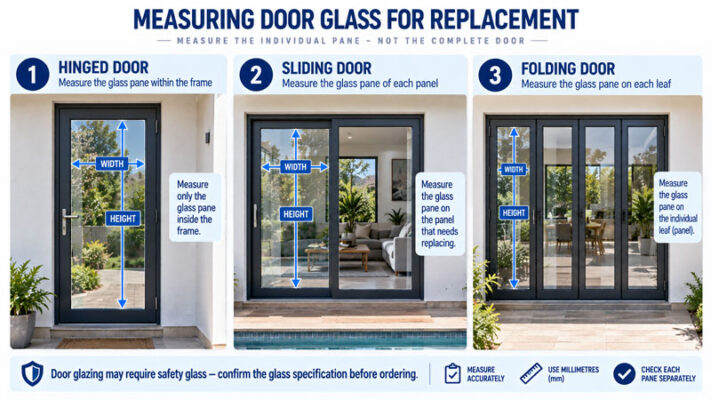
The same basic method can be used for:
- Hinged aluminium doors
- Sliding patio doors
- Folding doors
- Entrance doors
- Commercial doors
Record:
- Glass width
- Glass height
- Approximate thickness
- Door type
- Photos of the complete door
Important
Door glass may require safety glass, so do not order ordinary float glass simply because it looks similar to the broken pane.
Identify Your Window Glass Type 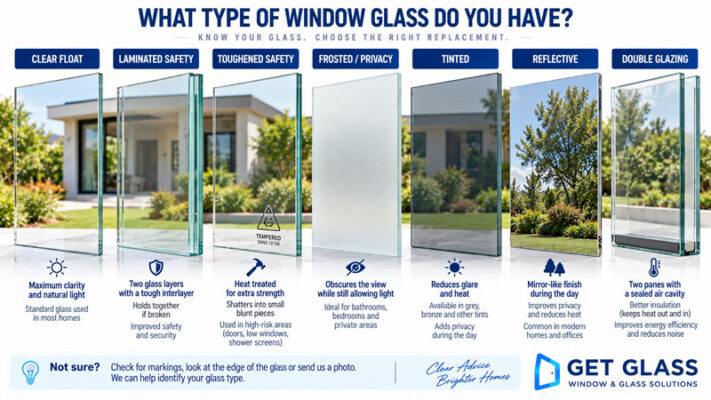
Try to identify the existing glass before requesting replacement.
| Glass type | What to look for |
| Clear float glass | Ordinary transparent glass |
| Laminated glass | Multiple bonded layers |
| Toughened glass | May have a permanent safety mark |
| Frosted glass | Translucent privacy appearance |
| Obscure glass | Textured privacy surface |
| Tinted glass | Grey, bronze or another tint |
| Reflective glass | Stronger daytime reflections |
| Double glazing | Two panes separated by a cavity |
If you are unsure, send us a photo.
Is It Safety Glass?
The replacement pane may need to be safety glass depending on its location.
Pay particular attention to glass in:
- Hinged doors
- Sliding doors
- Folding doors
- Large glazed panels
- Low-level windows
- High-risk impact areas
The correct replacement glass should be confirmed before ordering.
Common Window Glass Measuring Mistakes 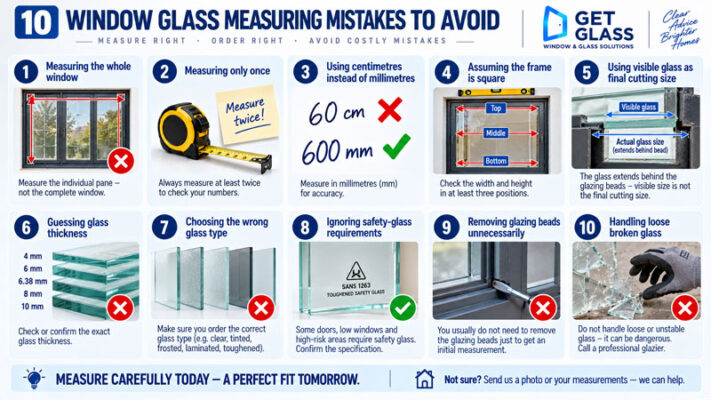
Avoid these common mistakes:
- Measuring the whole window instead of the broken pane
- Taking only one measurement
- Measuring in centimetres instead of millimetres
- Assuming the frame is perfectly square
- Using visible glass size as the final cutting size
- Guessing the glass thickness
- Ordering the wrong glass type
- Ignoring safety-glass requirements
- Removing glazing beads unnecessarily
- Handling loose or shattered glass
What to Send for a Window Glass Replacement Quote 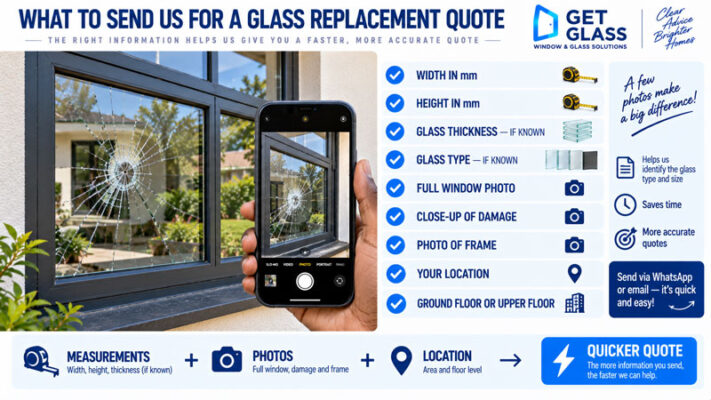
For a faster quote, send Get Glass:
- Width in mm
- Height in mm
- Glass thickness, if known
- Glass type, if known
- Photo of the complete window
- Close-up of the broken pane
- Photo of the frame
- Your suburb/location
- Ground floor or upper floor
Photo Tip
Send at least:
1 wide photo — showing the complete window
1 close-up photo — showing the broken glass and frame
Should You Measure the Glass Yourself?
Basic measurements are useful for getting an initial window glass replacement price.
Professional measurement is recommended for:
- Large glass panes
- Sliding doors
- Hinged doors
- Folding doors
- Safety glass
- Double glazing
- High-level windows
- Commercial glazing
- Unusual window frames
- Completely shattered panes
Window Glass Measuring Checklist
Before sending your enquiry, check that you have:
☐ Width in mm
☐ Height in mm
☐ Approximate thickness
☐ Glass type if known
☐ Full window photo
☐ Close-up photo
☐ Frame type
☐ Property location
☐ Access information
Frequently Asked Questions
Do I measure the glass or the whole window?
Measure the individual pane that needs replacing, not the complete window.
Should I measure in mm or cm?
Use millimetres (mm).
Is the visible glass size the replacement glass size?
Not necessarily. Part of the pane normally sits behind the glazing beads, frame or putty.
Can I measure aluminium window glass without removing the beads?
Usually, yes. Measurements and photographs are normally sufficient for an initial quote.
What if the window is completely shattered?
Measure the opening if it is safe to do so and send photos of the complete frame.
How do I know my glass thickness?
Check an exposed edge only if it is safe. Otherwise, send a close-up photo and let the glazier confirm it.
Can I measure sliding door glass myself?
You can provide approximate width and height measurements for a quote, but the final size and safety-glass specification should be confirmed before ordering.
Measuring Tips
- Always measure in millimetres for accuracy
- Double-check measurements before placing orders
- If measuring a broken pane, measure the opening, not the shard
- Round down, not up, to ensure the pane fits inside the rebate or beads
- When unsure, request on-site measuring from a glass supplier
Sample Measurement Sheet
| Pane Code | Width (mm) | Height (mm) | Thickness | Glass Type | Notes |
| KITCH-W1 | 1200 | 900 | 6mm | Clear | Single fixed pane |
| BED2-W3 | 600 | 1000 | 16mm | Double-glazed | Spacer: silver |
Need Window Glass Replacement?
Get Glass provides professional window glass replacement, broken window repair, aluminium window glass replacement, steel window glass replacement, wooden window glass replacement, safety glass replacement and door glass replacement across Johannesburg, Sandton, Randburg, Midrand, Centurion and Pretoria.
For a quick glass replacement quote, send us:
Measurements + Photos + Location
We can then help identify the correct glass and arrange professional replacement.
